
If you have noticed a squeaking or squealing noise coming from your Audi when braking, you are not alone. Brake noise is one of the most common concerns Audi owners experience, particularly in stop-start city driving.
While a squeak does not always mean something is seriously wrong, it is often a sign that your braking system needs inspection. Modern Audi braking systems are designed for performance and safety, but they can produce noise when certain components begin to wear or conditions change.
Understanding the common causes of squeaking brakes can help you determine whether your Audi simply needs cleaning, maintenance or brake replacement.
Worn Brake Pads
The most common cause of squeaking brakes is worn brake pads.
Most Audi brake pads include a small metal wear indicator designed to produce a high-pitched noise when the pad material becomes thin. This sound acts as an early warning that the pads are approaching the end of their lifespan.
If the noise occurs consistently when braking, especially at low speeds, it may indicate the pads need replacing soon. Ignoring worn pads can lead to damage to the brake rotors, which increases repair costs.
Brake Dust Build-Up
Audi vehicles are known for producing more brake dust than some other brands. High-performance braking systems generate fine particles that accumulate on brake components.
When dust builds up between the brake pad and rotor surface, it can create vibration and squeaking sounds during braking. This is especially common after driving in heavy traffic or after extended periods without cleaning the braking system.
In many cases, a professional inspection and cleaning can resolve the issue.
Glazed Brake Pads or Rotors
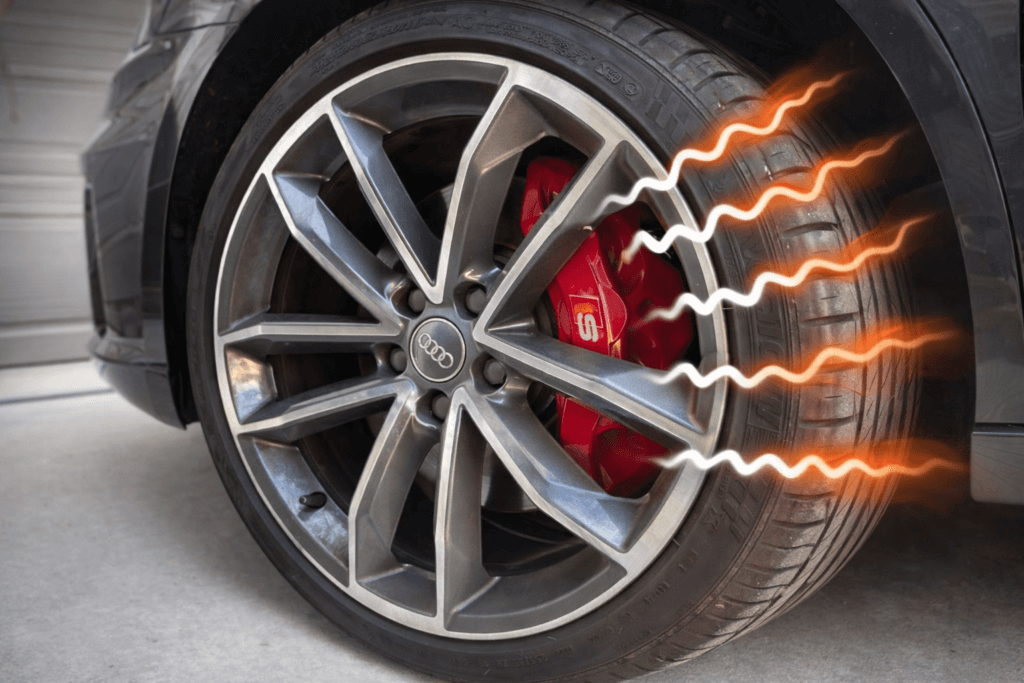
Glazing occurs when brake pads or rotors overheat and develop a hardened, smooth surface.
This can happen when brakes are repeatedly applied lightly or when they are exposed to excessive heat. Once the braking surfaces become glazed, they may produce a squealing noise when the pads contact the rotor.
Glazed components can sometimes be corrected with proper resurfacing or may require replacement depending on the severity.
Moisture and Weather Conditions
In Brisbane’s humid climate, it is normal for moisture to accumulate on brake rotors overnight. A thin layer of surface rust can form when a vehicle is parked for extended periods.
When you first drive and apply the brakes, this light corrosion is quickly removed, which can produce a brief squeaking or grinding sound. If the noise disappears after a few braking applications, it is usually nothing to worry about.
However, persistent noise should always be inspected.
Incorrect Brake Pad Installation
Brake noise can sometimes occur after brake pads have been replaced incorrectly. If the correct parts are not used or the installation procedure is not followed properly, the braking system may develop squeaks or vibration.
Audi braking systems often require specific procedures, including correct torque settings, proper lubrication points and resetting electronic wear sensors. This is one reason many Audi owners choose specialist workshops for brake servicing.
Warped or Uneven Brake Rotors
Brake rotors can wear unevenly over time, particularly if the vehicle has experienced repeated heavy braking. When rotors become uneven, the brake pads may not make consistent contact with the surface.
This can lead to vibration through the steering wheel, pulsation when braking or squeaking noises at certain speeds.
In these situations, the rotors may need resurfacing or replacement depending on their condition.
When Should You Get Your Audi Brakes Checked?
If your Audi brakes squeak occasionally, it may simply be dust or moisture. However, you should have the braking system inspected if:
- The squeaking occurs consistently when braking
- You notice reduced braking performance
- The noise is accompanied by vibration or pulsation
- A brake warning light appears on the dashboard
Brakes are one of the most important safety systems in your vehicle, so early inspection can prevent more expensive repairs later.
Audi Brake Servicing in Brisbane
If your Audi brakes are squeaking or making unusual noises, a professional inspection can quickly identify the cause. From worn brake pads to rotor wear or brake dust build-up, addressing the issue early helps maintain safe braking performance.
At Audi Service Brisbane, we provide specialist inspections, brake pad replacement and rotor replacement for the full Audi range. Our technicians understand the unique braking systems used across Audi models and ensure repairs are carried out to manufacturer standards.
If you suspect your Audi brakes need attention, book a brake inspection with our Brisbane specialists and drive with confidence.